Anyone visiting a physiotherapist with heavy legs, lymphedema, or lipoedema will soon hear two terms: manual lymphatic drainage and pressotherapy. They share the same goal: getting stagnant fluid moving again. However, they work very differently.
The question “pressotherapy or manual lymphatic drainage?” sounds like a choice between two treatments. In practice, it is rarely an either-or. A pressotherapy device does not replace your physiotherapist; it complements their work. Below, you can read what each does, where the differences lie, and how to use them together.
What is manual lymphatic drainage?
During manual lymphatic drainage, a therapist, usually a physiotherapist with additional training, massages your skin using gentle and rhythmic hand movements. The pressure is low. The aim is not to loosen muscles, but rather to help stimulate the superficial lymphatic system.
A treatment almost always begins centrally: at the lymph nodes in your neck, armpits, or groin. Only then does the therapist work towards the swollen area. In this way, he first creates space for the fluid to go.
What is pressotherapy?
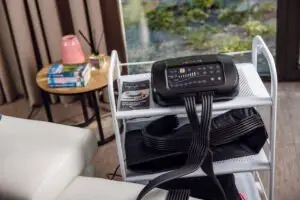
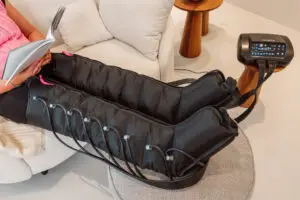
In pressotherapy, you put on cuffs with air chambers around your legs, arms, or abdomen. A device inflates these chambers one by one and then deflates them. In your limbs, this wave always flows towards your torso: from your foot to your hip, or from your hand to your shoulder. In this way, the pressure pushes fluid in the direction in which your body eliminates it.
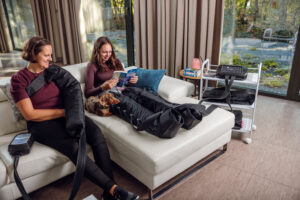
You lie or sit, and the device does the work. A session usually lasts half an hour. This can be done at a practice, but also at home.
The main differences
| Manual lymphatic drainage | Pressotherapie | |
|---|---|---|
| Who carries out | A trained therapist | A device, at home or in a practice |
| Where | Also torso, neck, armpit and face | Legs, arms and belly |
| Adaptation | The therapist feels the tissue and adapts. | Fixed programs; you set the pressure and time yourself |
| How often | Depending on your appointments | Possible daily |
| Costs | Per session | Per session at a practice, or a one-time purchase |
Where the hands of a therapist make the difference
A physiotherapist feels where the tissue is hardened, works around scars, and treats areas where a cuff does not fit, such as your torso or neck. He can also clear the central lymph nodes first before starting on your leg. A device feels nothing. It does what you set it to do.
Where a device makes the difference
Regularity. Fluid builds up every day, even on days when you don't have an appointment. With a device at home, you do a session on those days without having to leave. Moreover, the pressure is always the same, and in the meantime, you can simply read or watch TV.
Can pressotherapy replace manual lymphatic drainage?
In the case of a medical condition such as lymphedema : no, not just like that. Treatment usually consists of a combination of manual lymphatic drainage, compression with stockings or bandages, exercise, and skin care. Pressotherapy can play a role in this, as a supplement and not as a replacement. You decide this together with your doctor or physiotherapist.
Do you not have a medical condition, but do you have heavy or tired legs after a long day or after exercising? Then a device is sufficient for many people.
This is how you combine both
The effect of a manual session does not last indefinitely. If there are a few days between two appointments, fluid often accumulates again in the meantime. With a device at home, you keep this better under control on the days between your sessions. This way, you don't start from scratch every time you reach your next appointment.
- Let your physiotherapist determine how often you need manual lymphatic drainage.
- Use pressotherapy at home on the days between your appointments.
- Discuss the pressure and the program with your therapist. You can also bring your device to the practice.
- Wear your compression stockings after a session if they are prescribed.
Some physiotherapists use a device themselves: first manually releasing the central zones, then pressotherapy on the leg. This way, you combine the best of both in one appointment.
Which device for a medical question?
Are you using pressotherapy alongside a treatment for lymphedema or lip edema? Then choose a device that is certified as a medical device. The Nymph 8 and the wireless Nymph 8 PLUS are Class IIa medical devices under the MDR, just like the Nymph 4 and 6. Which ones cuffs You need depends on the zone you are treating.
Frequently asked questions
Is manual lymphatic drainage better than pressotherapy?
Neither is generally better. Manual lymphatic drainage is more targeted and reaches areas where a cuff does not fit. Pressotherapy is easier to apply frequently and regularly. For lymphedema, they are usually used together.
May I have pressotherapy on the same day as manual lymphatic drainage?
That is possible, and some therapists even do it consecutively. Follow your physiotherapist's advice, especially if you are being treated for a condition.
Can I do pressotherapy at home while I am receiving treatment from a physiotherapist?
Yes, and often that is exactly the intention. A device at home is a supplement to your treatment: on the days between your appointments, you keep fluid better under control. Do let your physiotherapist know what you do at home, so they can take it into account in your treatment plan.
Are you unsure which device suits your situation or complements your treatment? Compare the Nymph-models of get in touch to try out a device in Ghent.